insight
Biomass as a Key Pillar of Europe’s Next Industrial Chapter
Is biomass the key to Europe’s future energy needs? Renewable, regenerative and already everywhere, from wood pellets for heating to energy from food waste, biomass is not a future solution, but a present one.
Biomass is a renewable energy source that comes from natural materials such as plants, animals and microorganisms. Unlike fossil fuels, it can be regenerated, making it a more sustainable alternative when used properly.
As the EU looks to strengthen its resilience and strategic autonomy, biomass is becoming more than just an energy source; it is a key driver of Europe’s future industrial model.
Unlocking the potential of biomass
Brussels is stepping up its commitment to biomass as a key pillar of both the energy transition and industrial future.
According to the European Commission’s Bioeconomy strategy & key facts, biomass is the leading source of renewable energy in the EU, accounting for most of the renewable energy consumption. Biomass production and use have also grown steadily in recent years, particularly in the forestry and agricultural sectors, which are the main sources of supply.
While the EU is largely self-sufficient in biomass supply, the Council underlines that sustainability is essential & encourages the use of biomass efficiently across value chains, protects the environment, and increases the use of by-products, bio-waste, and other secondary biomass resources.
The EU steps up its bioeconomy agenda
With the EU bioeconomy representing up to €2.7 trillion in value and supporting over 17 million jobs across the European Union, the sector can hardly be overlooked.
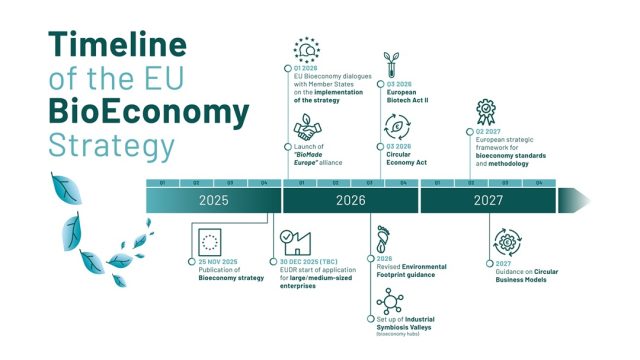
In late 2025, the European Commission launched a new Strategic Framework for a Competitive and Sustainable EU Bioeconomy, defining pillars and actions to shape Europe’s economic future based on the use of biomass. The new strategy positions the bioeconomy as a key driver to build a clean, competitive, and resilient economy, but also to strengthen the EU’s position in global bio-based markets.
This direction was reinforced on 17 March 2026, when the EU’s 27 Member States, gathered in the Council, adopted conclusions on the strategy, stressing the need for effective implementation of existing legislation and alignment of national approaches with the EU framework.
The Council also calls for stronger support for innovation and investment in sustainable bio-based solutions, including faster approvals and simplified rules, while stressing the importance of creating predictable demand and expanding ‘lead markets’ beyond existing sectors to areas such as textiles, footwear, paper and the blue bioeconomy.
Additionally, in December 2025, the Circular Bio‑based Europe Joint Undertaking (CBE JU), a partnership between the European Union and the Bio‑based Industries Consortium (BIC), announced €170.7 million in funding for new bio‑based innovation projects, covering areas such as industrial-scale biorefineries, biotech scale-up and circular design.
And that is just the beginning, as new initiatives to be rolled out by 2028 include a European Bioeconomy Investment Deployment Group to mobilise capital, a European bioeconomy regulators Forum to align policy and innovation, and large-scale market creation mechanisms targeting €10 billion in demand by 2030.
Bioeconomy as a driver for autonomy and resilience in Europe
Globally, the race for bio-based innovation is accelerating.
From the United States to China, countries are investing heavily in biomanufacturing.
By using locally sourced biological resources, the EU can reduce exposure to geopolitical shocks. By creating new bio-based industries, the block can strengthen competitiveness in manufacturing, while reducing long-term resource dependency by embedding circularity into production systems. This is why the EU strategy explicitly frames the bioeconomy as a tool for strategic autonomy and resilience.
How do we keep the bioeconomy at the forefront of conversation?
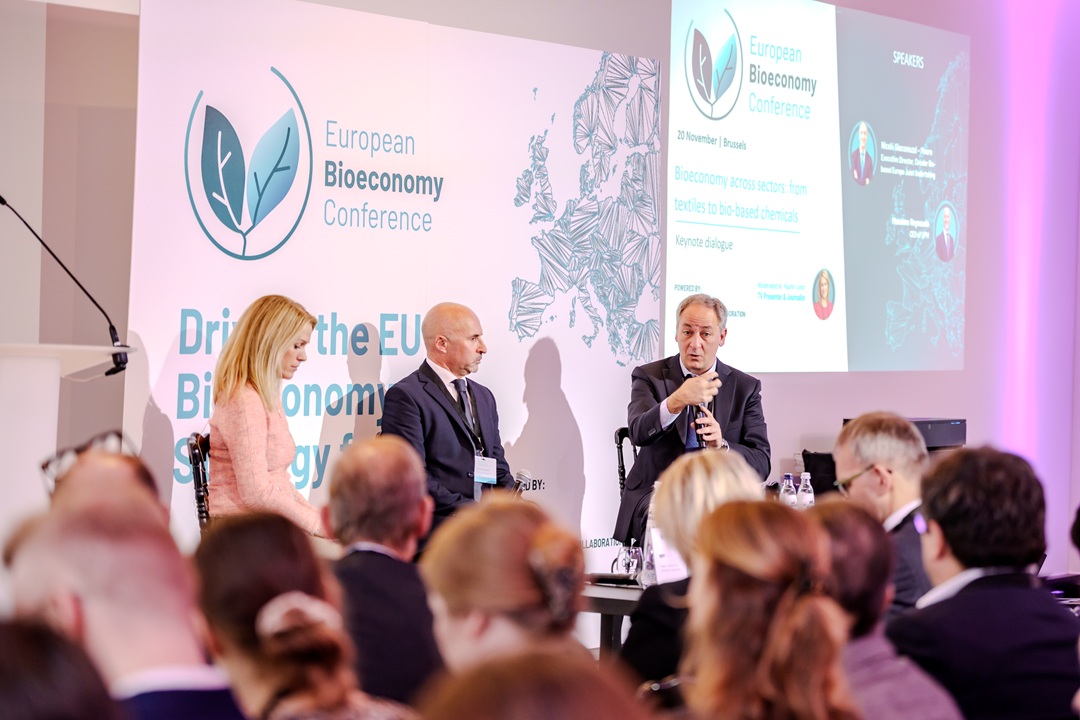
Across Brussels, a growing number of events, partnerships, and policy initiatives are emerging. Last year, the first high-level European Bioeconomy Conference, organised by logos in partnership with Cepi as kick-off partner, pioneered in gathering both policy and industry representatives with participants from the European Commission, the Circular Bio-based Europe Joint Undertaking, but also more than 30 CEOs spanning sectors from pulp and paper to bioplastics, packaging, and advanced bio-based materials.
This first high-level gathering showed the need for a platform that continues to bring together policymakers and industry representatives: moving forward, the Bioeconomy Conference will give us a window into the evolution of the Bioeconomy Strategy, while allowing policymakers to see the Bioeconomy in Action.
Reach out to our team to stay up to date on more opportunities to bring together perspectives on the Strategy’s key pillars and current market developments. Do not miss out on insights into how the strategy is evolving, highlighting the voices that matter for a sustainable and competitive bioeconomy.